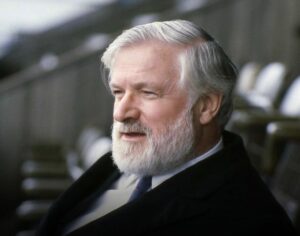
Ken Bates – 1931-2026
From the official Chelsea FC website:
Chelsea Football Club is today mourning the passing of former chairman Ken Bates.
He was 94 and passed away peacefully in Monaco this morning surrounded by his wife and family.
Chelsea Football Club made the following statement: ‘It is with great sadness that we share the news of the loss of Ken Bates, former owner and chairman of Chelsea Football Club. The club sends our heartfelt condolences to Ken’s wife Suzannah, the rest of his family and his friends.
‘Ken’s determination to fight for Chelsea when times were tough, and drive the team on to winning trophies will never be forgotten.’

Bates, the third-longest serving chair at Chelsea, held the position for 22 of the most significant years in our history.
Colourful, outspoken and controversial are adjectives often used to describe Bates, and his style, views and actions divided opinion, including among Chelsea supporters, but high up on his list of greatest achievements is ensuring Stamford Bridge remained Chelsea’s home.
During Bates’s tenure, the Blues were firstly promoted into the top division before winning the FA Cup twice plus the UEFA Cup Winners’ Cup, the League Cup, the UEFA Super Cup, the Community Shield and, on two occasions, a competition he jointly founded – the Full Members’ Cup.

Bates was a west Londoner by birth. From an ordinary background he became a self-made millionaire and was involved in running two football clubs in the north of England, Oldham Athletic and Wigan Athletic, prior to arriving at Chelsea.
For much of the 1970s Chelsea Football Club had stared bankruptcy in the face and the prospect was never more real than in the spring of 1982. The bank had already refused to extend our considerable overdraft and now it asked which of two outstanding cheques it should bounce, one for money owed to the FA, the other for the players’ wages. The players went unpaid.
Bates was invited by the club’s financial director to negotiate a deal to purchase the stricken company, one which brought to an end the dynasty of the Mears family which had founded Chelsea. The amount he paid was famously £1 although around two million pounds of debt was also taken on. The Blues’ immediate future was now safe but it was quite some task Bates had undertaken.
On the pitch, the team were soon embroiled in a battle just to stay in the old Second Division. Relegation to Division Three would surely have finished Chelsea for good. We survived, narrowly, and crucially Bates kept faith with the manager he inherited, John Neal.

While not in the position to spend huge sums, Bates made more transfer money available than for many years. It was spent brilliantly by Neal and his talent-spotting assistant Ian McNeill.
Chelsea were promoted and then just as quickly became a top-six side in the top flight. Away from the pitch, Bates was quickly becoming a household name for his combative views. His matchday programme page became essential reading and while he was quick to defend Chelsea fans when he believed they were wronged, he took steps to tackle anti-social behaviour.
Importantly, he was also steadily improving the financial health of the business.
A relegation back to Division Two proved to be a short-term blip but during the late 1980s and early 1990s there was a high turnover of managers while the club carried the huge burden of a threat to Stamford Bridge.
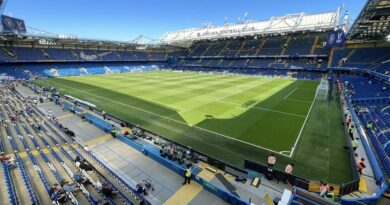
The ownership of the stadium had fallen into property developers’ hands but Bates’ fighting spirit and bloody-mindedness were just what was needed, as a long and draining legal battle was fought for Chelsea to remain at our home.
The Premier League era began with Bates a central figure, especially regarding the TV broadcasting contracts, and having appointed a young manager in Glenn Hoddle who was taking the team forward, Chelsea reached a crossroads.
A new investor and director had come on board, Matthew Harding, and he, Bates and Hoddle, along with managing director Colin Hutchinson, reached an accord that investment in the team and eye-catching signings were needed or Chelsea risked missing out on being part of a new football elite.

Serie A superstar Ruud Gullit was captured, with Mark Hughes quickly following, and then a host of high-quality, overseas signings as we were one of the quickest to take advantage of new transfer regulations.
Harding provided money to help begin a redevelopment of Stamford Bridge made all the more essential by the post-Hillsborough Disaster phasing-out of terracing. Bates raised further funds through a loan and a share floatation to accelerate his Chelsea Village project. Its aim was to turn the Bridge into an all-week-long venue. As well as new stands around the pitch there was to be a hotel, restaurants, flats, an underground car park, a health club and visitor attraction. He was also prominent in the early stages of the reconstruction of Wembley Stadium.
The most successful period of the Bates era began in the mid-1990s. Zola, Di Matteo, Desailly and Petrescu were just some of the famous names on the back of Chelsea shirts as silverware was lifted by Dennis Wise, a captain who enjoyed an especially close relationship with the chairman.
We qualified for the Champions League and made the last eight of that competition. The stadium and Chelsea Village development (which included Bates’ London home, one he retained long after leaving Chelsea) were completed with the chairman spending much of his time overseeing that side of the business while managing director Hutchinson looked after football matters.
The Blues moved into a position to be able to equal the British transfer record with the purchase of Jimmy Floyd Hasselbaink for £15 million in 2000, and top-six finishes were the norm, as home-grown John Terry established himself and Frank Lampard was signed.

But new financial clouds were gathering over Chelsea, as they had at other Premier League clubs at that time, and although a fresh qualification for the Champions League at the end of the 2002/03 season initially eased concerns, that summer Bates sold his stake in the club and Chelsea Village to Roman Abramovich, who subsequently purchased all shares to take complete control.
Bates remained in the position of chairman of the football club for another eight months before resigning. He later bought and ran Leeds United for a time but it was from the directors’ box at Stamford Bridge he on occasions watched games in his final years.

Football club chairmen became prominent and well-known like never before in the latter part of the 20th Century and none more so than Ken Bates. He was a fighter and proud to be known as one, and the victories he achieved helped shape the Chelsea we know today. A businessman who undeniably loved watching football as well as running football clubs, the Bates chapter in the history of Chelsea Football Club is long, important and certainly not dull.


‘Chelsea Supporters Group’ can also be found on X and Facebook and Bluesky